
How to Describe Your Dream Interior to an AI Designer
August 6, 2025
Describing a dream interior can be a surprisingly difficult task — especially when your imagination is vivid, but the words feel vague. Fortunately, AI designers are built to understand both structured requests and free-form descriptions. The key is clarity and context.
Let’s start with the basics. An effective prompt includes three elements:
1. The type of room – bedroom, kitchen, office, etc.
2. The style or mood – Scandinavian, industrial, cozy, minimal, warm, artistic.
3. Any specific wishes or constraints – color palette, lighting, square footage, materials, or furniture types.
For example, instead of saying “I want a nice living room,” you could say:
“Design a 20 m² living room in Japandi style, with soft natural light, light wood furniture, and neutral tones. Include a reading nook and space for indoor plants.”
You don’t need to be a professional to write a great brief. Even conversational requests like:
“My apartment is small, and I’d love a bright, airy kitchen with green accents and open shelves.”
— can generate incredible, personalized results.
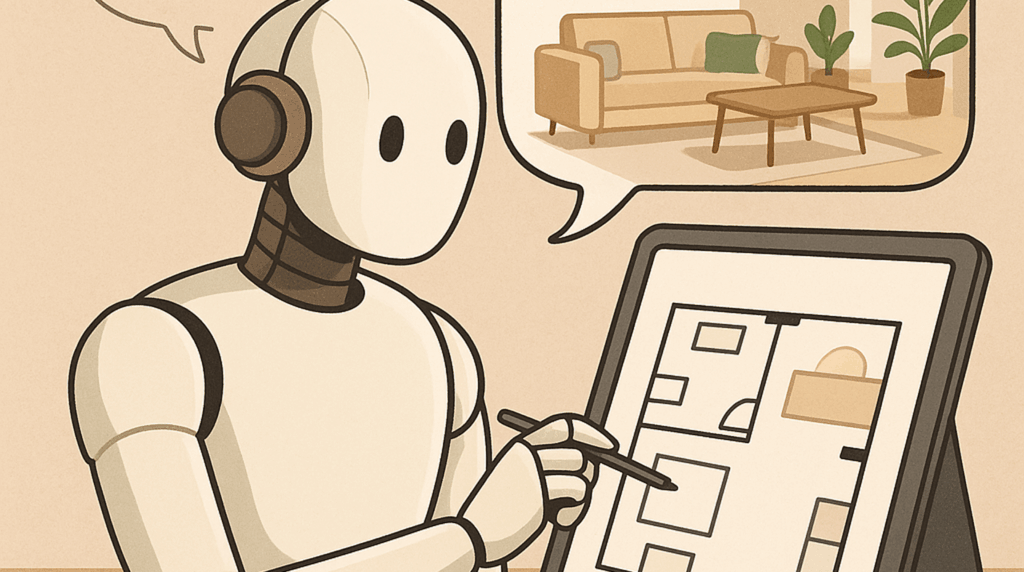
Don’t forget to upload supporting materials, like floor plans or photos of the space. The more context, the smarter the response. AI thrives on data — it can fill in the gaps creatively, but it still benefits from guidance.
If you’re unsure about style names, describe feelings: “calm,” “cozy,” “bold,” or “luxurious.” The AI will match them to design principles and create visuals that reflect your mood.
Finally, iterate! The best results often come from a bit of back-and-forth. Start broad, then refine details. Think of the AI designer not as a machine, but as a creative assistant — ready to bring your vision to life.
Other articles