
From Inspiration to Reality: Turning Moodboards into Interiors
August 6, 2025
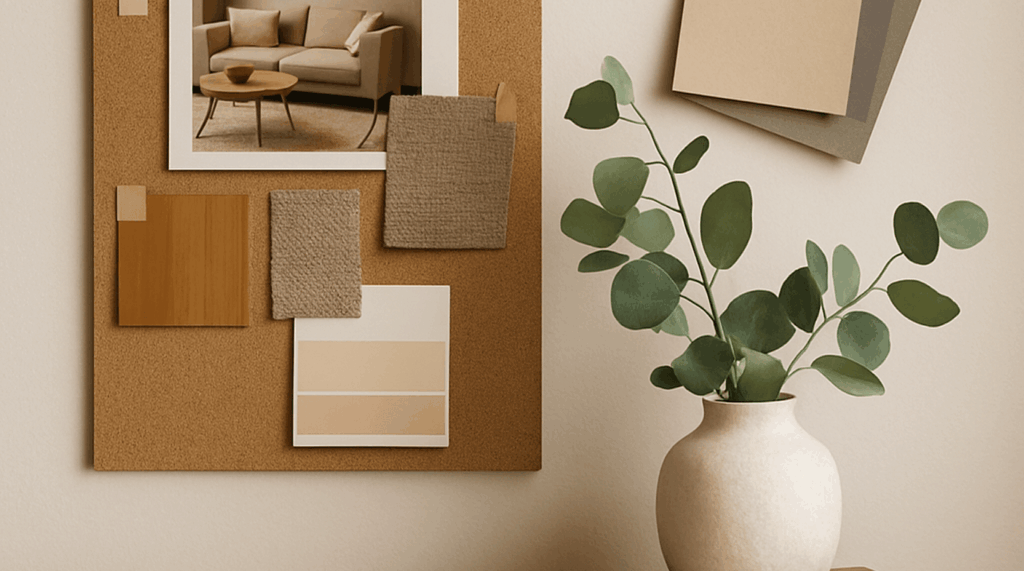
A moodboard is often the first spark — a curated collection of colors, materials, furniture, and references that define the feeling of a future space. But how do you take that collage of images and turn it into a tangible, livable interior?
Start by identifying the emotional core of the moodboard. Ask: what atmosphere is it conveying? Is it calm and earthy, bright and playful, dark and moody, or sleek and minimal? The emotional intention should guide all decisions, from layout to materials.
Next, translate visual inspiration into actual components. A photo of an old Parisian café might inspire a wall with aged mirror panels or brass lighting. A swatch of linen fabric may lead to choosing natural textures across curtains, sofas, or bedding. Don’t copy the images — interpret them. Use them as springboards, not prescriptions.
Colors on a moodboard often come together harmoniously — but in real life, paint behaves differently under changing light. Always test shades in the space itself, using samples on large surfaces. The goal is to maintain the mood, not necessarily the exact RGB values.
Balance is key. A moodboard may include five different materials, but not all need to be used. Sometimes just two or three thoughtful textures (wood, stone, velvet) can evoke the same richness when applied consistently.
And remember functionality. A beautiful moodboard doesn’t always consider daily life. That luxurious white wool rug may look perfect in a collage but might not be ideal with kids or pets. Translate the feeling into something practical — a washable off-white cotton instead, for instance.
Finally, bring it all together in layers. Start with the big surfaces (walls, floors), add your large furniture pieces, and then layer in lighting, art, accessories, and greenery. Keep checking back to your moodboard — not for exact matches, but for alignment in tone and feeling.
Design is not about imitation. It’s about translation — turning emotion into function, and vision into form.
Other articles