
Common Interior Design Mistakes to Avoid
August 6, 2025
Even the most beautiful spaces can suffer from small design missteps that undermine comfort, flow, and visual harmony. Knowing the most common mistakes — and how to avoid them — can save time, money, and frustration when creating an interior.
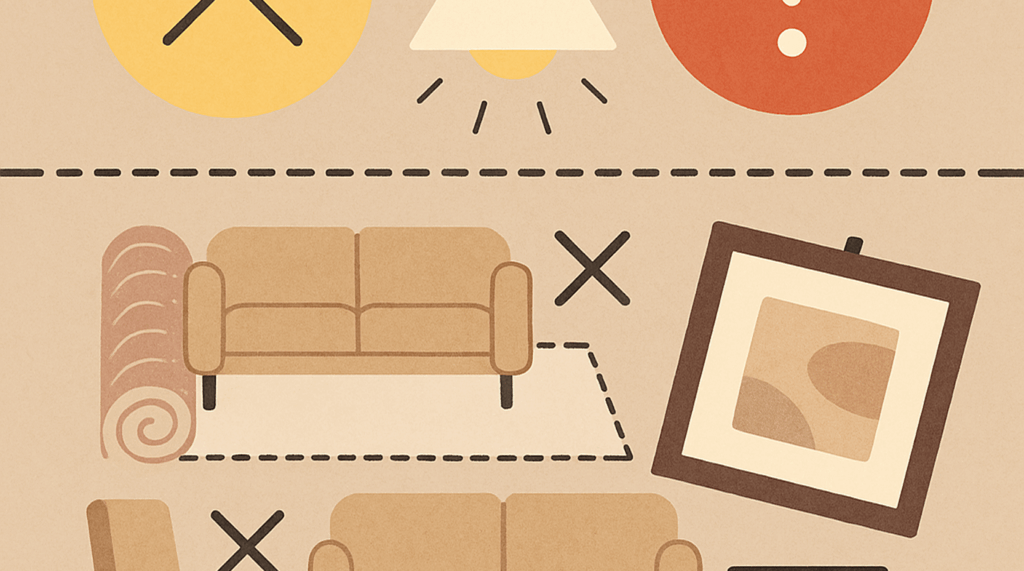
One of the most frequent issues is poor lighting. Relying solely on a single overhead light can make even a stylish room feel flat and lifeless. Always layer lighting: combine ambient, task, and accent lights. Use floor lamps, wall sconces, and even candles to create depth and warmth.
Another common pitfall is pushing all the furniture against the walls. This might seem like it opens up space, but it often makes a room feel disconnected. Try floating furniture — a sofa with some breathing room behind it or two chairs arranged diagonally — to create more inviting and purposeful zones.
Scale is often overlooked. Using oversized furniture in a small space can overwhelm, while tiny pieces in a large room can feel lost. Take measurements seriously and use mockups or painter’s tape on the floor to test proportions before buying.
Matching everything too perfectly is also a mistake. Coordinated furniture sets can make a space feel sterile or staged. Mixing textures, materials, and tones adds personality and makes a room feel layered and authentic. Let contrast bring the space to life.
Neglecting rugs is another missed opportunity. A rug that’s too small can throw off the entire room. Ideally, rugs should anchor furniture — for example, a living room rug should be large enough that at least the front legs of sofas and chairs rest on it.
Choosing form over function is an easy trap, especially with trendy items. That sculptural chair might look incredible online, but if it’s uncomfortable to sit in, it’ll end up unused. Always prioritize livability, especially in spaces used daily.
Finally, not giving the design time to evolve is a mistake. Great interiors often grow over time — through layers, stories, and experiences. Don’t rush to fill every wall or corner. Leave space for life to happen.
Interior design is not just about creating a look — it’s about crafting a feeling. And avoiding these common pitfalls is the first step toward creating a home that’s both beautiful and livable.
Other articles